

Cash Flow
A Cash Flow Statement (or Statement of Cash Flows) is a financial report that tracks the influx and outflow of cash within a business over a specific period. Unlike an income statement, which includes non-cash items and accrued revenue, the cash flow statement reveals the exact movement of liquid money, providing a clear picture of a company’s operational health, solvency, and short-term liquidity.
Core Cash Flow Definitions
-
Statement of Cash Flows
A primary financial statement detailing how changes in balance sheet accounts and income affect cash and cash equivalents. It breaks down cash movement into three distinct areas: Operating, Investing, and Financing activities.
-
Cash and Cash Equivalents (CCE)
The most liquid assets on a balance sheet. Cash includes currency and demand deposits, while cash equivalents consist of short-term, highly liquid investments easily convertible into known amounts of cash (e.g., Treasury bills, commercial paper) with maturities of three months or less.
-
Liquidity
The efficiency or ease with which an asset or security can be converted into ready cash without affecting its market price. High liquidity indicates strong short-term financial resilience.
-
Accrual Accounting vs. Cash Accounting
-
Accrual Accounting:
Recognises revenue when earned and expenses when incurred, regardless of when cash changes hands.
-
Cash Accounting:
Recognises revenue and expenses strictly when cash is received or paid out. The Cash Flow Statement bridges the gap between accrual-based net income and real cash movement.
The Three Pillars of Cash Flow
-
1. Cash Flow from Operating Activities (CFO)
Cash generated or used by a company’s primary core business operations. It shows whether a business can produce sufficient cash flow to maintain and grow operations without external financing.
-
Inflows:
Cash collected from customers, accounts receivable collections.
-
Outflows:
Payments to suppliers, employee wages, rent, operating expenses, tax payments.
-
2. Cash Flow from Investing Activities (CFI)
Cash spent on or generated from investments in long-term assets and physical capital.
-
Inflows:
Proceeds from selling property, plant, and equipment (PPE), sale of investment securities, collection of loans.
-
Outflows:
Capital expenditures (CapEx), purchasing real estate, equipment, or acquiring other businesses.
-
3. Cash Flow from Financing Activities (CFF)
The net flow of funds used to fund the company, including transactions involving debt, equity, and dividends.
-
Inflows:
Issuing equity/shares, taking out bank loans, issuing corporate bonds.
-
Outflows:
Dividend payouts to shareholders, share buybacks, principal repayments on debt.
Essential Metrics & Formulas
-
Free Cash Flow (FCF)
The cash a company generates after accounting for cash outflows that support operations and maintain its capital assets. It measures profitability after necessary investments in fixed assets.
-
Operating Cash Flow Ratio
A liquidity metric that evaluates if a company can cover its short-term liabilities with the cash generated from primary operations.
-
Net Cash Flow
The overall difference between a company's total cash inflows and total cash outflows over a specific accounting period.
-
Burn Rate
The rate at which a company consumes its cash reserves before generating positive operating cash flow. Commonly tracked by startups and high-growth businesses.
-
Working Capital
The difference between current assets and current liabilities, representing the operating liquidity available to fund day-to-day business operations.
Working Capital & Operational Terms
-
Accounts Receivable (AR)
Money owed to a company by its debtors for goods or services delivered but not yet paid for. Outstanding AR represents cash tied up in operations.
-
Accounts Payable (AP)
Short-term obligations owed by a company to its suppliers or vendors for products and services received on credit.
-
Days Sales Outstanding (DSO)
The average number of days it takes a business to collect payment after a sale has been made. Lower DSO indicates faster cash recovery.
-
Cash Conversion Cycle (CCC)
A metric depicting the time (in days) it takes for a business to convert its investments in inventory and other resources into cash flows from sales.
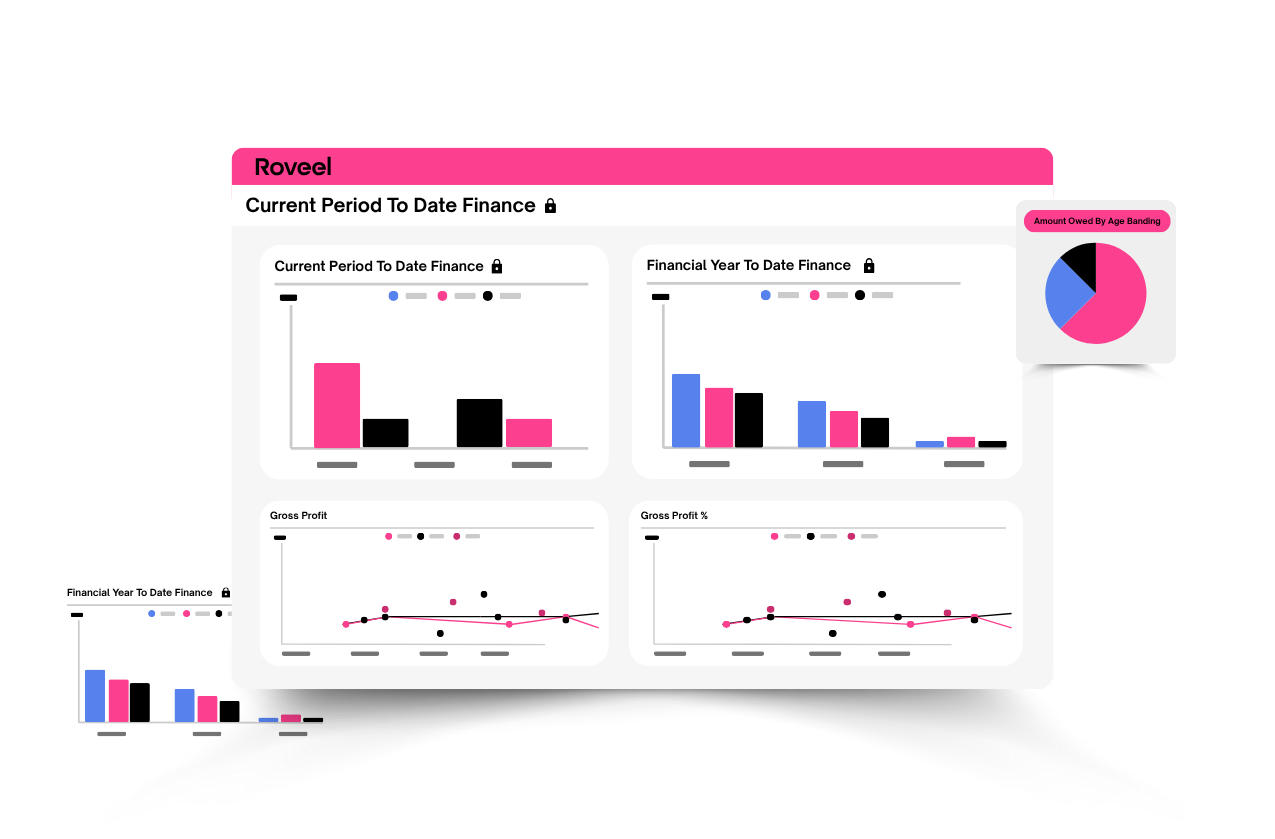
Managing cash flow shouldn’t involve complex spreadsheet work or outdated accounting reports. Roveel integrates directly with your existing accounting software to give you instant visibility into your cash flow, working capital, and revenue trends.
FAQs
How does Roveel help manage business cash flow?
Roveel connects directly with your accounting software (such as Sage Accounting, Sage 50, Sage 200 and Xero) to automatically turn raw ledger entries into visual dashboards. It gives you immediate visibility into cash movement, outstanding debtors, creditor obligations, and operating cash trends without requiring manual spreadsheet work.
Does Roveel support transaction-level drill-down for cash flow metrics?
Yes. Every summary figure or KPI on Roveel’s cash flow and credit control dashboards allows you to click and drill down directly to the underlying transactions, making it easy to identify specific unpaid invoices or large cash outflows.
Can Roveel help reduce Days Sales Outstanding (DSO)?
Yes. Roveel includes dedicated Credit Control and Debtor Analysis dashboards that break down aged debt by customer, highlight overdue invoices, and help teams proactively manage collections to improve overall cash flow.